Not yet published: imported
Yarn ·
Is wool the PERFECT sweater yarn? [2 of 5]
Wool yarn for sweaters regulates temperature and springs back into shape, but it costs more and can felt, with three wool yarns I like.
In an earlier piece we discussed what yarn weights work best for knitting a sweater.
Now that you have an idea of what yarn weight you want to use, it’s time to decide what fiber(s) it should be made of.
The Three Primary Fiber Types
If you didn’t know, yarn is comprised of fibers, little strands of hair or filament that are twisted together to create thread or string. Sometimes those strings or twisted together with other strings in a process that is called plying.
Think of plying as similar to braiding your hair. This plying adds thickness (weight) and strength to the yarn. But the fibers that compose those strands add their own characteristics as well.
The type of fiber(s) used in a yarn will determine:
- How soft or smooth the yarn feels
- How nicely the finished fabric drapes
- How warm the finished fabric is
- How expensive the yarn is
- How the yarn is cared for
- How resilient or hardwearing the finished fabric is
Different fiber types have unique characteristics that contribute to these factors in their own way.
There are three primary categories of fiber type that we’ll be examining going forward:
Animal fibers
These are fibers that come from animals or insects like goats (cashmere and mohair), alpaca, llama, camel, yak, buffalo, rabbit (angora), worms (silk), or sheep (wool).
Plant fibers
These are fibers that come from plant sources like cotton, linen, hemp, bamboo, seaweed, and soy.
Synthetic fibers
These are fibers that are man made, usually from some type of plastic or other chemical process such as acrylic, polyester, nylon, and rayon.
As you can see each of these categories has multiple fibers within them, but to make things simpler, we’ll take a closer look at the most common fiber types from each category;
Wool, Cotton, and Acrylic.
Let’s Talk About Wool Baby
Wool is the undisputed king of the yarn world.
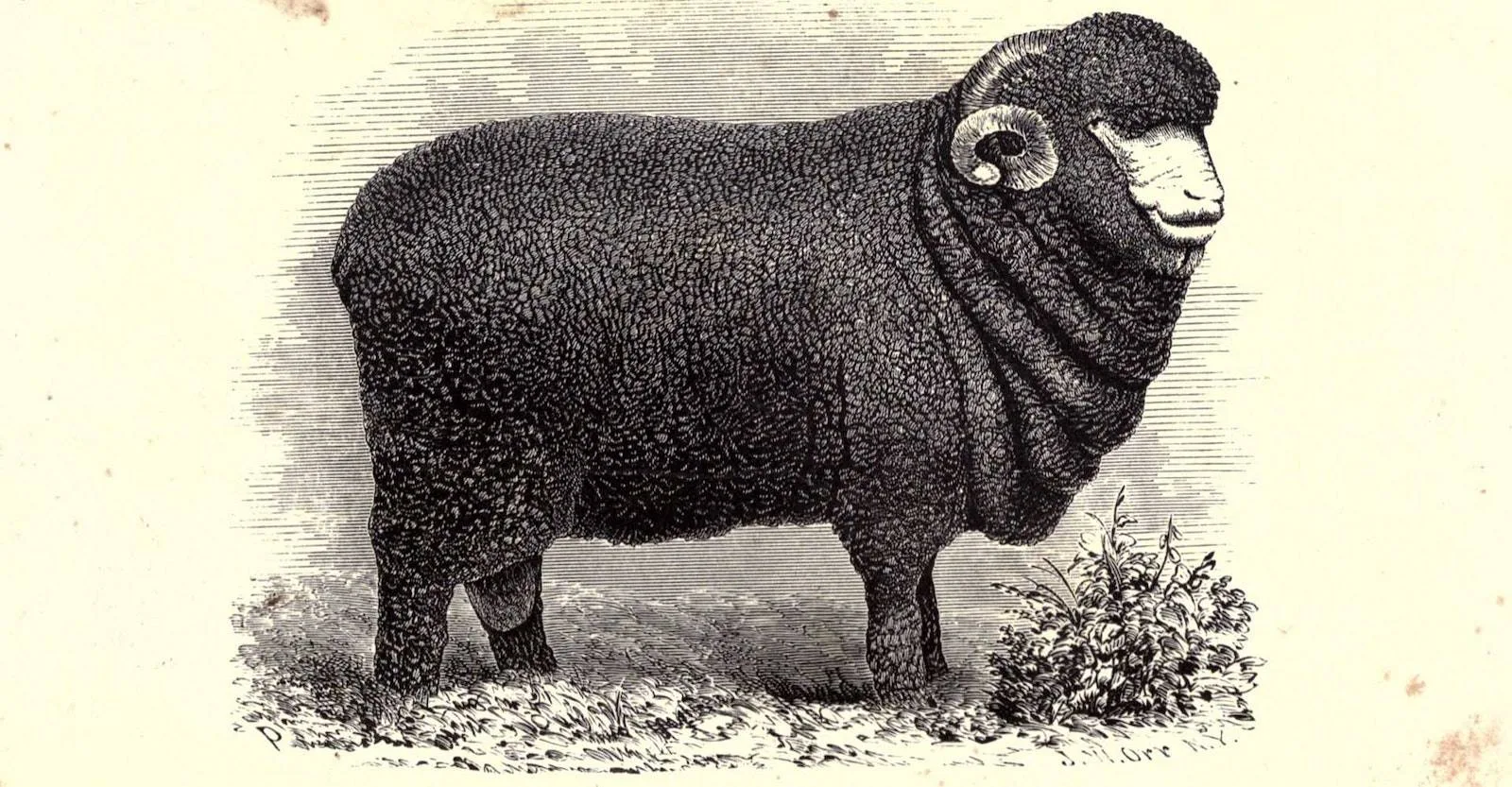
It’s been used for thousands of years and there are a FEW HUNDRED breeds of sheep that provide wool that is suitable for wearing as clothing.
So what is it about wool that makes it so great?
1. Wool is great at regulating temperature
The primary function of a sheep’s wool fleece is to trap air near it’s body. This trapped air allows the sheep to maintain a consistent temperature regardless of changes in the weather.
While most people believe that wool is mostly for keeping you warm, wool is really good at keeping you comfortable, whether it’s hot outside or cold. Merino wool is particularly good at maintaining a comfortable body temperature, but most wool does this naturally.
2. Wool is soft (usually)
Most animal fibers have what’s called a crimp. Think of it as a little squiggly line of hair. The more squiggly the hair, the softer and higher quality the fiber.
Sheep breeds like Merino, Cormo, and Columbia tend to have fleeces with high crimp. But wool can also be processed to remove hair scales and oils so that the yarn feels more smooth and soft.
Often it’s a lower quality wool fiber that causes irritation to skin, so some people believe they have a wool allergy when really they’re just reacting to low quality wool.
3. Wool is resilient
That crimp we mentioned before also has a memory. If the fibers are stretched, they will naturally return to their original shape.
On the other hand, a fiber like Alpaca is straight, and while it is soft and warm, it has no memory. Once it’s stretched it ain’t coming back.
This fiber memory allows you to wash your garments without them losing their shape. In addition, wool fibers tend to have longer staples, or hair length, which reduces pilling after wearing a garment.
Oh yeah, and it doesn’t burn.
All of these things make wool an ideal fiber for both yarn and sweaters.
Disadvantages of Wool
The best wools are not cheap. While they’re definitely worth the price in the long run, it can be quite an investment up front.
Wool is also known to felt when agitated, so it is not usually machine washable.
And although wool is great at temperature regulation, it still tends to be too hot for warm climates.
My Favorite Wool Yarns
Lion Brand Wool-Ease (Best Budget Option)
This affordable wool yarn is blended with a bit of acrylic, keep it budget friendly. It also comes in a TON of colors.
Knit Picks Wool of the Andes (Best All Around)
If you want a 100% wool yarn that is a great workhorse at an affordable price, you could do worse than this.
Malabrigo Rios (Best Luxury Option)
If a yarn could be Brad Pitt, this would be it. With charming colors and incredibly soft. silky fibers, it’s easy to see why people swoon for this yarn.
Conclusion
If you’re not allergic and you want something warm, wool is the way to go.
But if you can’t do wool or need something cooler we need to look at Cotton…
Which we do in a separate piece.