Not yet published: imported
History ·
How knitting began the industrial revolution
Three inventors who improved the knitting machine, from the Derby rib to circular and sock machines, and why that left hand knitting free to be a pleasure.
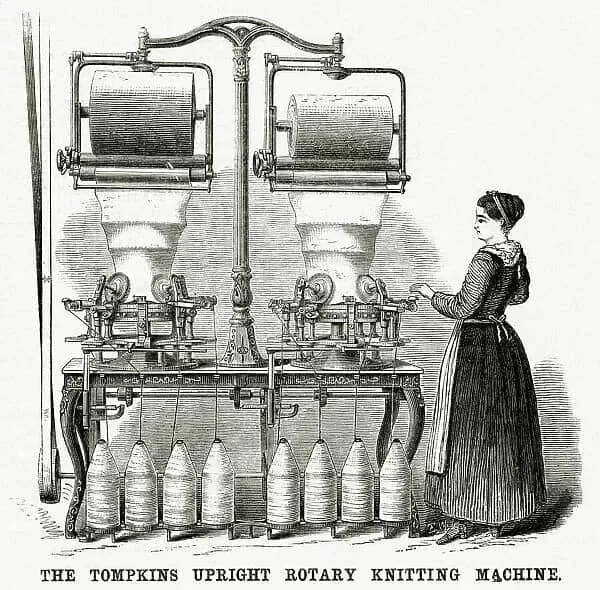
We’ve been exploring the men who transformed knitting from a cottage industry to the manufacturing mammoth it is today.
We’ve already discussed how the first knitting machine, invented in 1589, would lead to the start of the Industrial revolution.
We’re going to follow three men who built upon that earlier invention to bring knitting to the modern age.
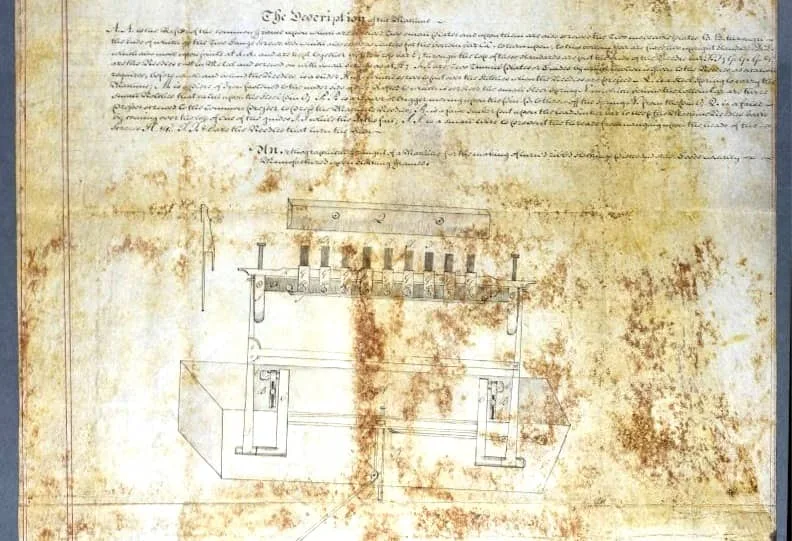
Jedediah Strutt: The Derby Rib
Almost 200 years after the invention of the first knitting machine another Englishman came up with an idea to improve how stockings were made.
His unique contribution was alternating the direction of the needle loops, creating a fabric that was more flexible and stretchy. It allowed for more fitted garments, particularly stockings which could hold closer to the skin and still stay up.
These new “ribbed” stockings quickly took over as the preferred style.
But maybe even more impactful was when he partnered with Samuel Need and Richard Arkwright in 1768 to build a cotton spinning mill in Cromford. This water powered mill was the first of its kind and many consider it the start of the Industrial Revolution.
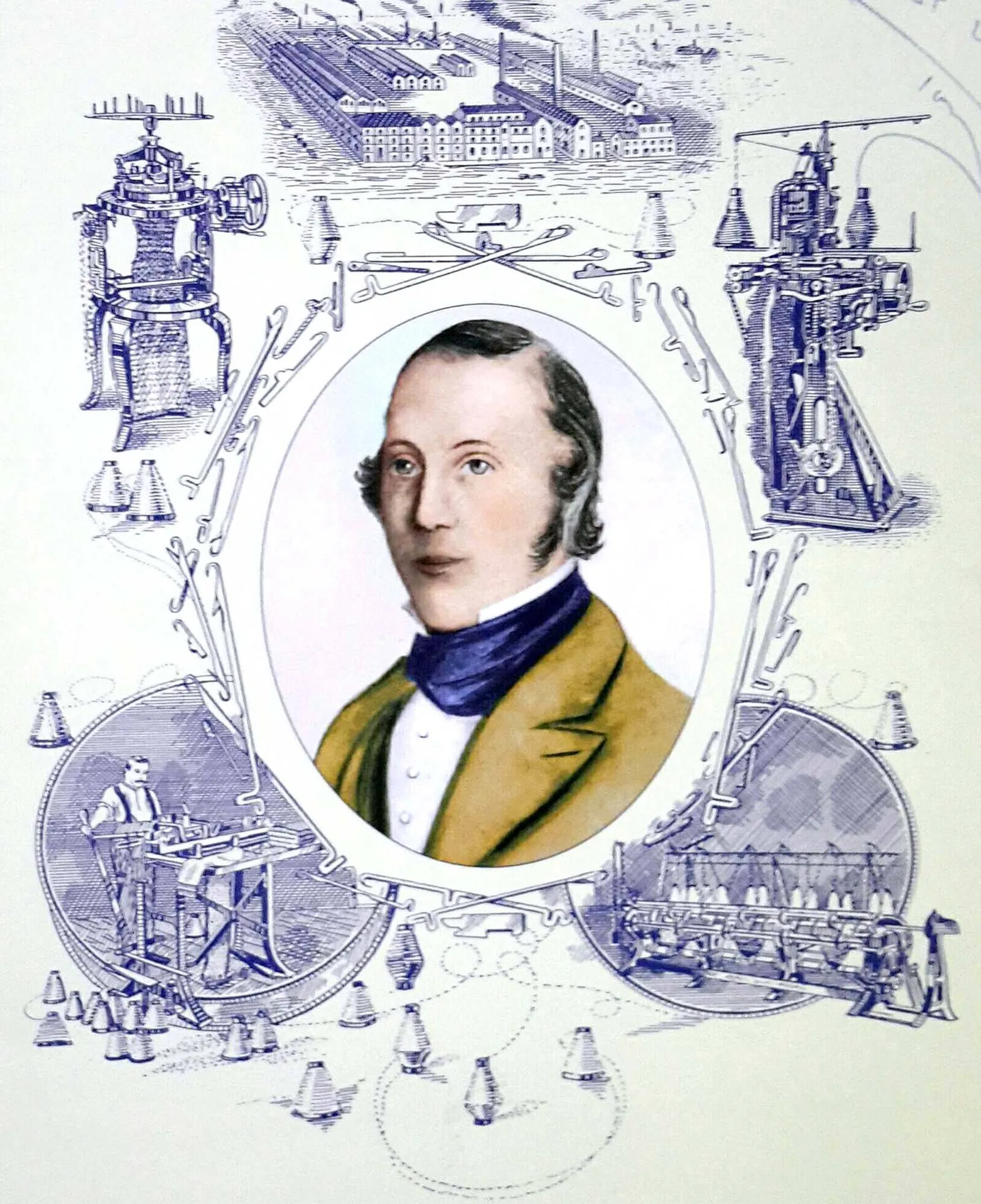
Matthew Leo Townsend: The Circular Knittting Machine
Up until the mid-nineteenth century knitting machines were still largely based on the original stocking frame.
That is until Matthew Townsend invented a new kind of needle that incorporated a moveable latch.
This latch hook enabled for faster and finer knits. It also could be mounted vertically, allowing for the first circular machines to be developed.
These circular machines could make seamless fabrics that grew in popularity during the American Civil War. Especially since they were half the size of a sewing machine and easily transported.
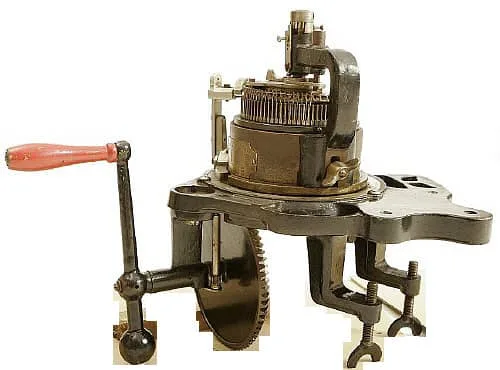
Henry Josiah Griswold: The Sock Knitting Machine
It’s surprising how much of the mechanization of knitting has revolved (😂) around knitting.
While small circular knitting machines were being manufactured around the world for making socks, Griswold changed the game again.
By adding a second cylinder of needles to his machines he finally enabled them to make seamless ribbed socks.
These devices become so popular throughout England that ALL similar machines became known as “Griswolds”.
In fact little improvement was made in knitting machine technology after the late 1800s.
They were commonly used throughout the first and second world wars, allowing volunteers to literally crank out a pair of socks in about 40 minutes.
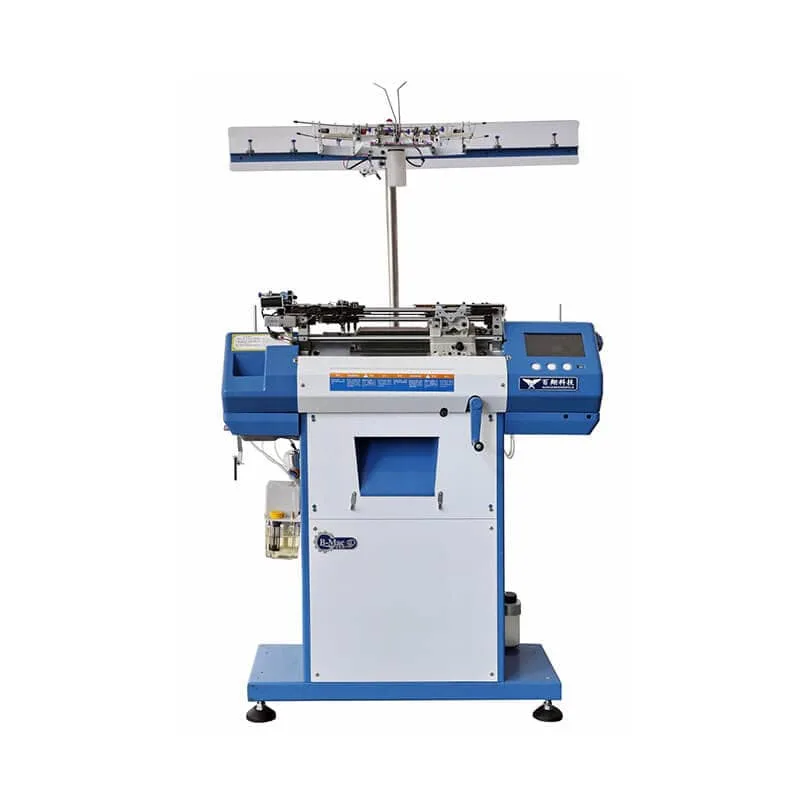
It would be almost another 100 years before Masahiro Shima would introduce his fully automated seamless glove-knitting machine to Japan in 1962. This development finally brought knitting machines into the computer age.
Why it matters
We started this series talking about how the vast majority of knitted goods are knit by machine.
And it was the ingenuity of men who allowed women to stop knitting with their hands as a way to make ends meet.
Today we can get high quality, comfortable knitted shirts, sweaters, hats, and of course socks, at extremely affordable prices.
But it also means that we can enjoy hand knitting for pleasure, and explore interesting stitches, pattern combinations, and garment constructions that machines could never do.
Mechanized knitting has opened up the creativity of the yarn craft world, and we are much better for it.