Not yet published: imported
4 keys to getting started with knitted charts
Four simple tips for knitting from charts, from reading the basics to starting with a symmetrical pattern and printing your chart out.
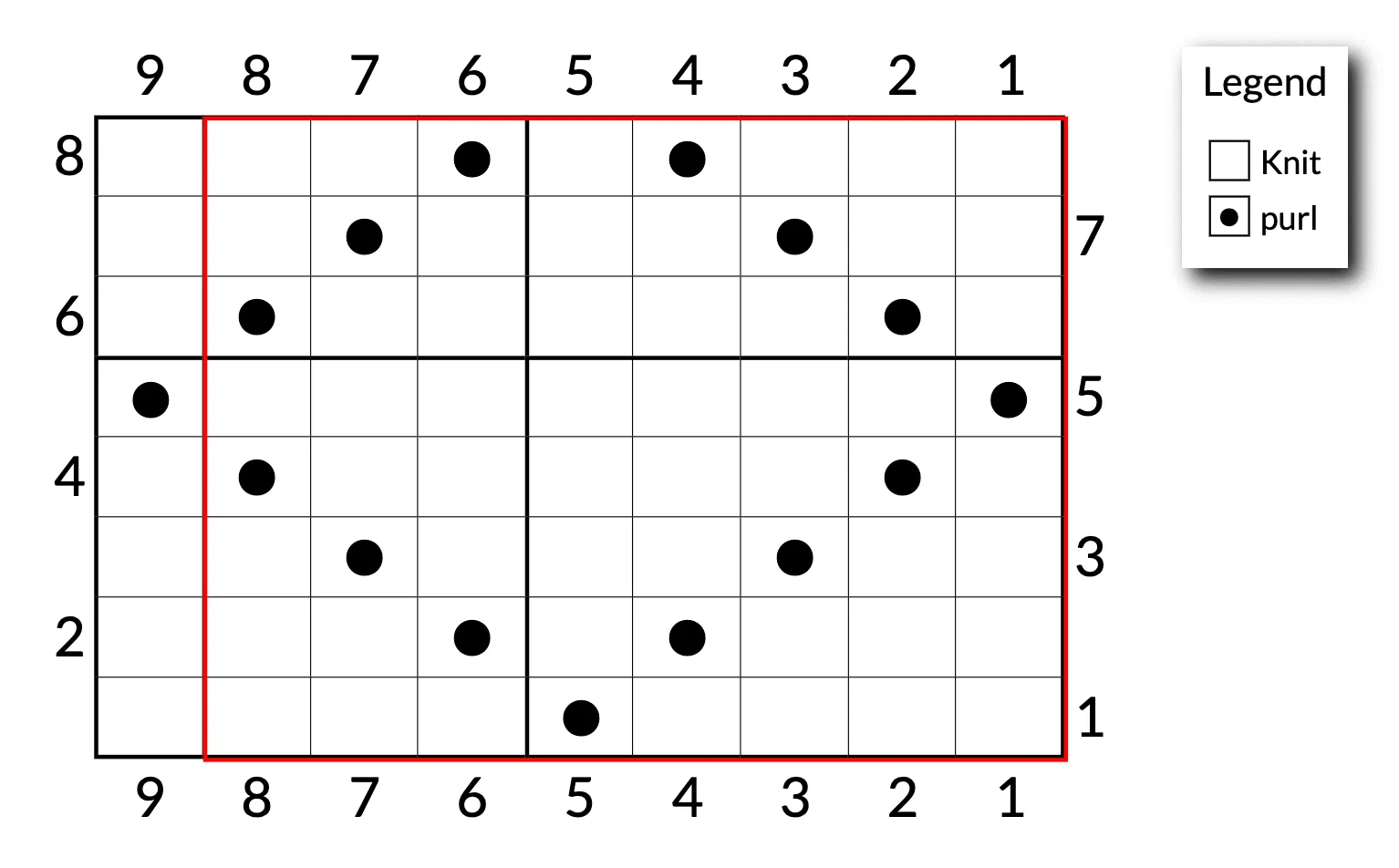
Knitting from charts doesn’t have to be hard.
In fact learning to knit from a chart will certainly make you a more fearless knitter.
But if you’ve never tired using a charted pattern you may be wondering where to start.
So today I’m giving you 4 simple tips you can use today to practice knitting from a chart.
Key 1 - Understand the basics of reading a chart
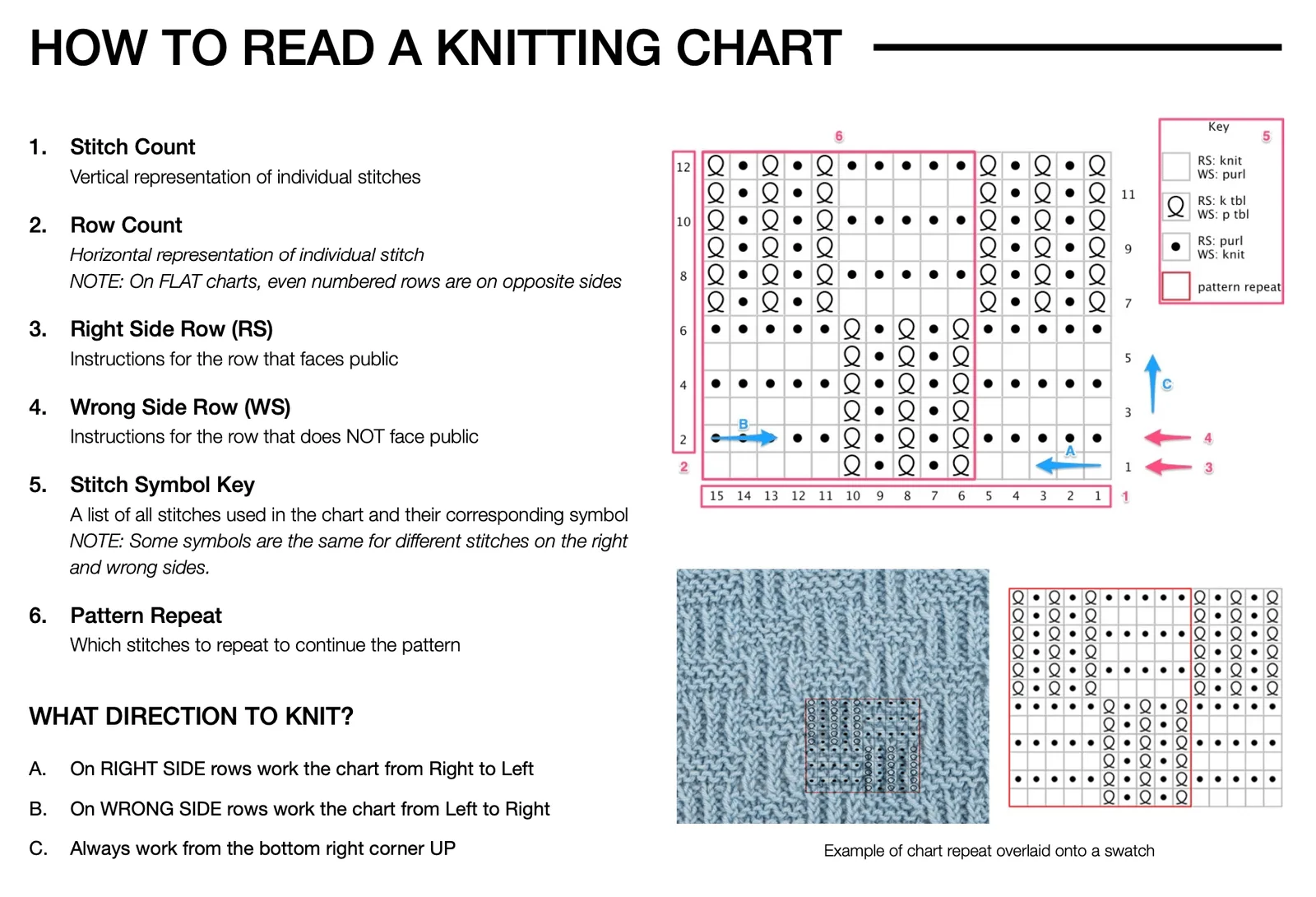
All charts have the same basic elements.
The diagram above gives a good overview of what those elements are.
It doesn’t matter how simple or complicated the chart is, it will almost always include these things.
Key 2 - Start with simple and symmetrical
We want to set ourselves up for success.
That means baby steps.
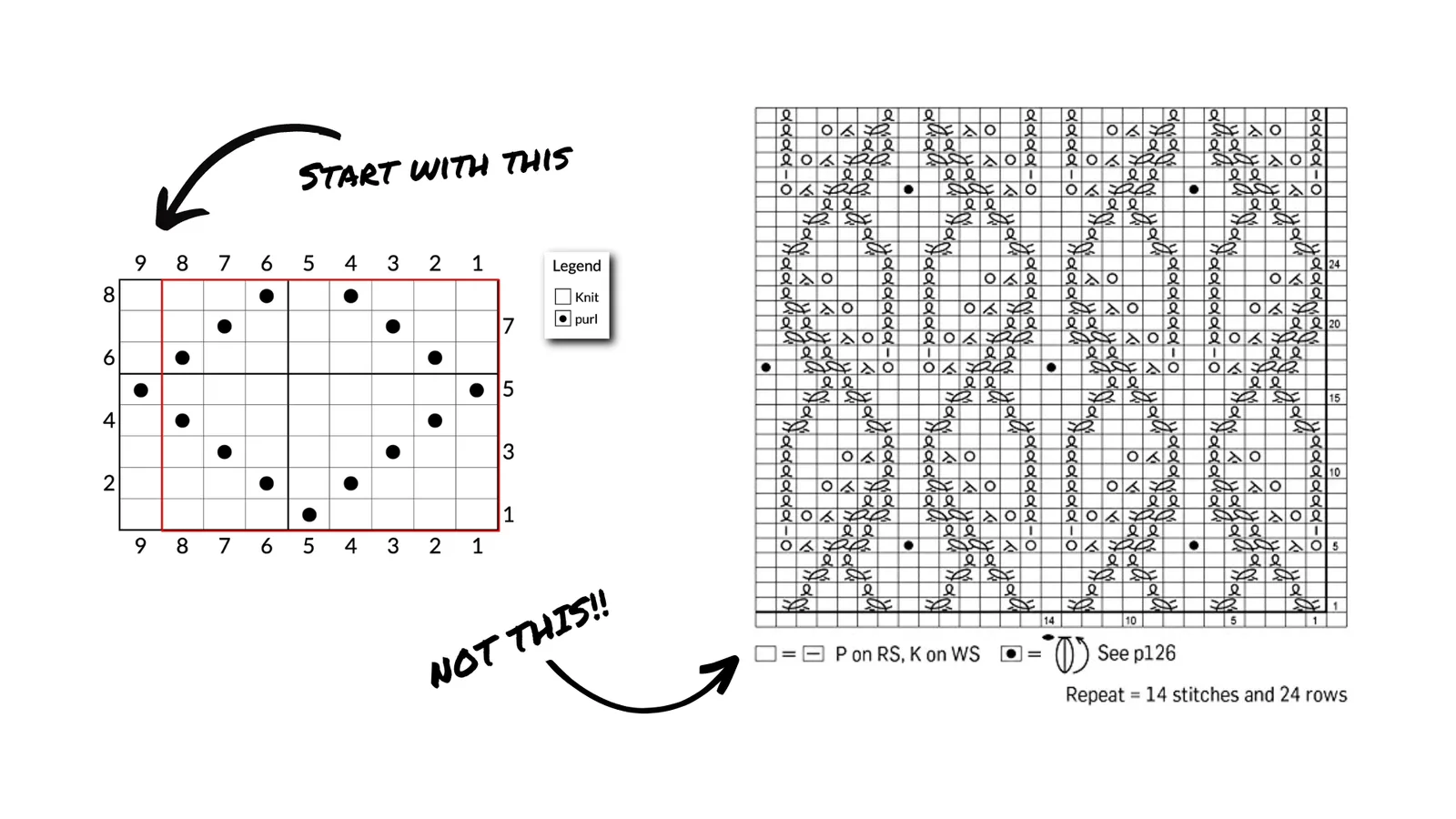
Even if it seems TOO easy, it’s better to practice using a simple, symmetrical pattern that uses just knits and purls.
Try knitting from only the chart without referencing the written instructions.
Key 3 - Print out your chart
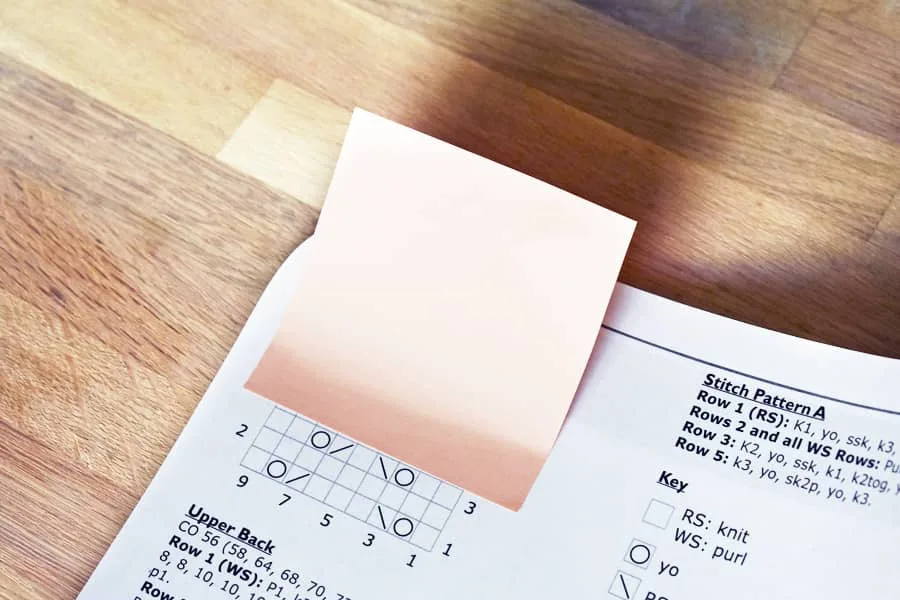
Yes everything is moving digital these days, but it will be A LOT easier to keep track of your chart by printing it out.
Use a sticky note to block the part you haven’t knit yet.
You’ll be able to track your progress and stay focused on the current line at the same time.
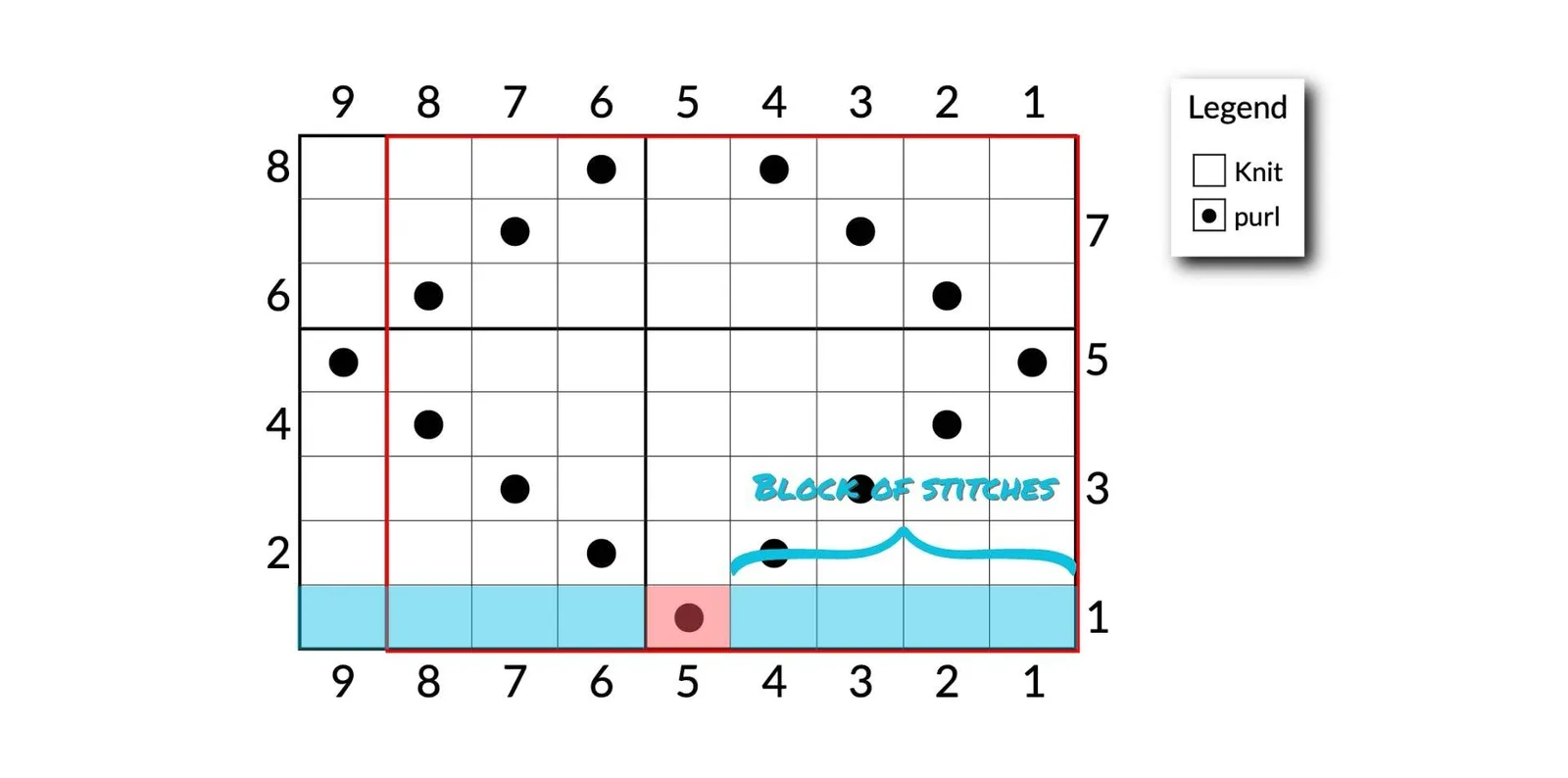
Key 4 - Think in stitch blocks
It will be really cumbersome to reference every single square in your chart.
Focus on the sections of the line that are the same.
Ex. In row 1 of the chart above you have 4 knit stitches, 1 purl stitch, and 3 more knit stitches (in the repeat)
Your knitting will go smoother this way, and smooth is fast.
So there you have it!
4 things you can do to start reading knitted charts today.